
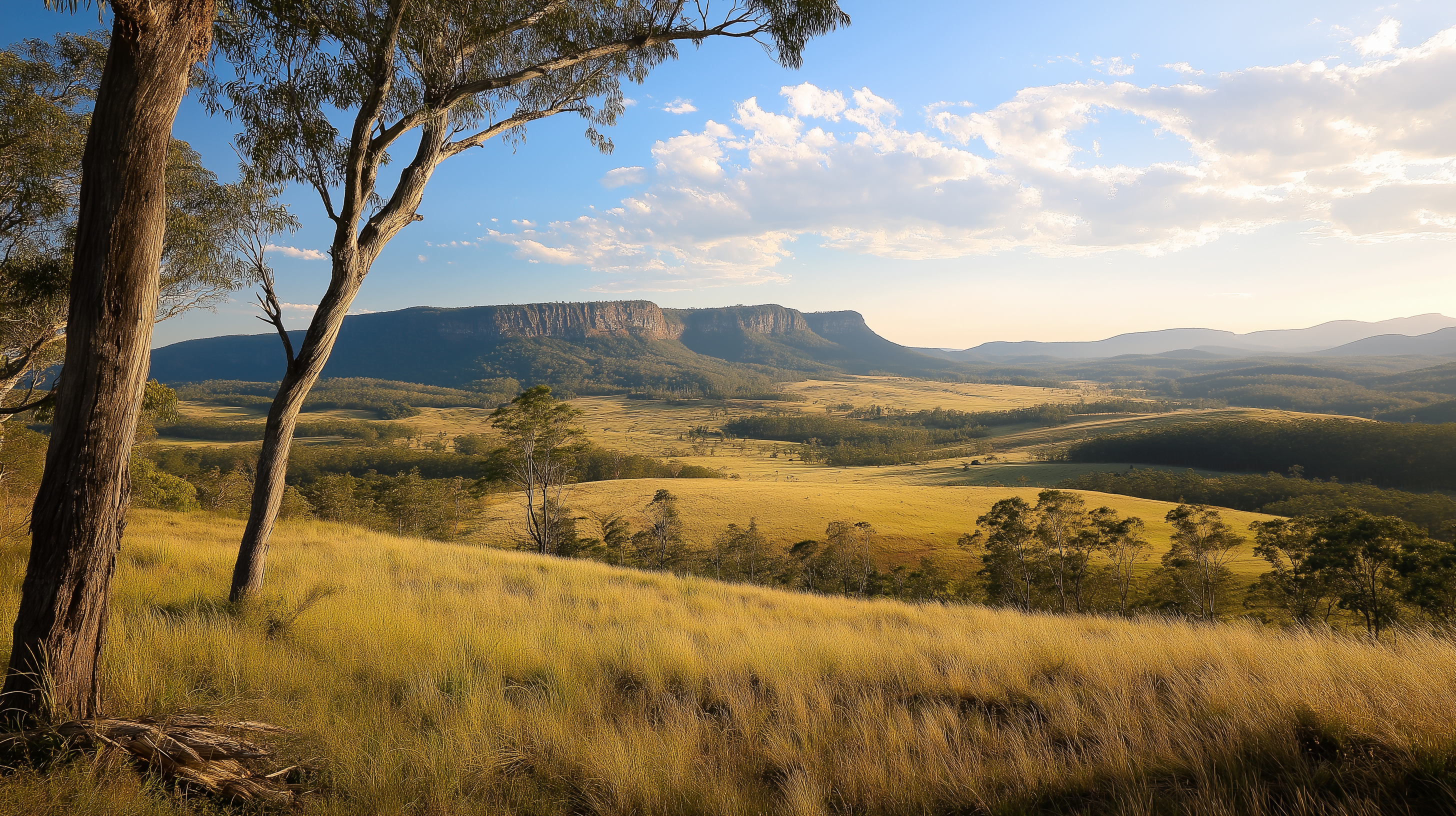
When you arrive in Hunter Valley wine country, it is easy to see vineyards first: the neat rows of vines, the cellar doors, the curve of the Brokenback Range in the distance. What is less obvious, unless someone tells you, is that every one of those views sits on Wonnarua Country – land cared for, walked, sung and storied for tens of thousands of years before the first vine was planted.
This article is an invitation to look again at the Hunter through Wonnarua eyes, so that when you swirl a glass of semillon or shiraz, you also feel something of the Country beneath it.
Who are the Wonnarua people?
The Wonnarua people are the traditional custodians of much of what we now call the Hunter Valley, including the areas around Maitland, Singleton, Muswellbrook, Scone and the upper reaches of the Hunter River.
Archaeological evidence and community knowledge suggest that Wonnarua people have lived in the Upper Hunter for at least 30,000 years, with oral tradition placing their connection to this Country deep into the Dreaming – well before the first European maps, fences or vineyards.
Today, the Wonnarua Nation Aboriginal Corporation (WNAC), established in 1999, represents Wonnarua people and works to preserve their history, culture and rights as the traditional owners of the Hunter Valley.
Understanding “Country” in the Hunter
When Wonnarua people speak of “Country”, they mean more than land. Country is the rivers, hills, animals, plants, ancestors, stories and spirits – all connected. It is a living relationship rather than a piece of real estate.
Wonnarua Country stretches across an area of roughly 2,000 square miles. Historical and linguistic research places it along the Upper Hunter River above Maitland, west toward the Great Dividing Range and around places like Singleton, Muswellbrook and Wollombi.
The language spoken here is often referred to as Wanarruwa, part of the broader Hunter River – Lake Macquarie language group. That name reflects a network of closely related dialects rather than strict modern borders, but it reminds us that the voices of this valley long predate English place names like “Pokolbin” or “Broke”.
As a visitor, simply knowing you are on Wonnarua Country changes the way the landscape feels. The range behind the vines is not just a pretty backdrop: it is part of a story that has been told for thousands of years.
A valley shaped by Creation stories
Long before wine tourists followed Hermitage Road or Broke Road, Wonnarua stories were describing how the valley came to be. In Wonnarua tradition, the Hunter landscape was formed in the Dreaming. Everything lay sleeping until the Great Sky Spirit – often known as Baiame – opened his eyes and began shaping rivers, mountains and living beings.
Baiame is understood across parts of New South Wales as a creator figure and law-maker. For the Wonnarua, his presence is closely tied to the wedge-tailed eagle, whose watchful flight over the valley is seen as a reminder that the people and the land are being looked after.
One of the most important physical expressions of this story is Baiame Cave, near Milbrodale in the lower Hunter. The cave holds a large, ancient painting of a figure with long outstretched arms and big white eyes, looking out over the valley – widely understood as a depiction of Baiame. The site is listed on the New South Wales State Heritage Register and is considered of great cultural and spiritual significance to Wonnarua people and other Aboriginal communities.
Baiame Cave sits on private land and access is controlled to help protect the rock art. Some specialised tours, led by Wonnarua Elders and guides, enable visitors to experience the site respectfully and learn more about its stories.
Even if you never see the cave in person, understanding that the Hunter’s ridges and river flats are part of these creation stories adds a deeper layer to every view from a cellar door terrace.
Life on Wonnarua Country before colonisation
For tens of thousands of years, Wonnarua people lived in close relationship with this valley. The rivers, wetlands and forests that now sit beside vineyards were once important fishing and hunting grounds, rich with eels, fish, kangaroos and birdlife. Seasonal movements followed food sources and ceremony, linking the Hunter with neighbouring peoples through trade and shared stories.
Stone tools, scarred trees, ceremonial grounds and rock art sites across the region – including around Bulga, Wollombi and the Broke-Fordwich area – give us glimpses into this long history. These are not ruins of a vanished culture; they are evidence of a living one that continues today, even after immense disruption.
In this pre-colonial landscape, knowledge of Country was incredibly detailed. Seasonal signs – flowering plants, bird behaviours, subtle changes in the river – helped guide decisions about travel, food, fire and ceremony. Many of these local knowledges sit quietly behind the modern idea of “climate wisdom”: understanding when the valley will be hot, wet, smoky or cool, and how to move with it instead of fighting it.
When you hear a winemaker talk about “reading the season” in the Hunter today, it is worth remembering that Wonnarua people have been doing that on this same Country for an unimaginably long time.
Colonisation and its impacts
European settlement in the Hunter Valley began in the early 1800s, and with it came rapid and often violent change for Wonnarua people. Pastoral expansion, land grants and the establishment of farms and towns led to displacement, clearing of Country and intense competition for access to water and food.
Historical records describe conflict, killings and forced removals – part of what is now widely recognised as the Frontier Wars period across Australia. Mission stations and reserves disrupted traditional life and restricted movement. At the same time, disease brought by newcomers had devastating impacts on Aboriginal populations across the wider region.
In the Hunter, these pressures were compounded later by coal mining and other heavy industries, which further transformed the landscape and continue to create cultural and environmental challenges today. Heritage disputes – such as debates over historic homesteads and mining expansions on Wonnarua Country – underline that the story of land, ownership and justice in the valley is still unfolding.
For visitors, it is important to acknowledge that the beauty of the modern wine region sits alongside this difficult history. Doing so does not diminish the enjoyment of your trip; it makes it more honest, and, ultimately, more meaningful.
Cultural strength and renewal
Despite the impacts of colonisation, Wonnarua people have maintained a strong sense of identity and connection to Country. Community organisations, Elders, families and younger leaders are actively engaged in language revival, cultural education and heritage protection across the Hunter.
The Wonnarua Nation Aboriginal Corporation works to preserve historical records, protect important places and support cultural activities. Part of this work includes a dedicated Language & Culture Archive, hosted on the Mukurtu platform, which brings together songs, photographs, documents and stories for future generations.
Other local initiatives – from school programs acknowledging Wonnarua Country, to art projects, cultural days and guided tours to significant sites like Baiame Cave – help keep Wonnarua knowledge visible in the broader Hunter community.
As a guest in wine country, you may not see all of this directly, but you can choose experiences that respect and support it.
How visitors can connect respectfully with Wonnarua Country
You do not need specialist knowledge to begin engaging with Wonnarua Country – just curiosity and respect. Here are some practical ways to deepen your experience while you are in the Hunter:
1. Start with an Acknowledgement of Country
If you are travelling with family or friends, attending a wedding, or hosting a small gathering during your stay, taking a moment for an Acknowledgement of Country can set the tone.
A simple example:
“We acknowledge the Wonnarua people, Traditional Custodians of the land on which we gather today, and pay our respects to Elders past and present. We extend that respect to all Aboriginal and Torres Strait Islander peoples.”
You might say this before a shared meal, a tasting you are hosting, or a special celebration at your accommodation.
2. Seek out Wonnarua-led experiences
Where possible, look for tours and activities led by Wonnarua guides or businesses. Experiences such as small-group cultural tours to significant sites, including Baiame Cave, offer insight that no guidebook can match and ensure that your visit supports Wonnarua custodianship.
Ask local visitor centres, tourism websites or your accommodation host for current recommendations; these can change over time as new experiences are developed.
3. Respect cultural sites and signage
Across the Hunter you may come across signage marking Aboriginal places, scarred trees, rock art, ceremonial grounds or burial sites. Please:
- Stay on marked paths and viewing platforms.
- Do not climb on, touch or mark rock art or cultural features.
- Follow any requests from Traditional Owners or land managers about photography or access.
These sites are not just “attractions”; they are part of a continuous spiritual and cultural life.
4. Support Aboriginal artists and storytellers
Many Hunter Valley galleries, markets and online platforms showcase Aboriginal art, jewellery, weaving, books and music. Buying authentic works, especially those created by Wonnarua artists or other local First Nations creators, is a practical way to support living culture.
If you are unsure whether something is genuine, ask where it was made and who by. Look for galleries and businesses that clearly credit artists and share their stories.
5. Bring Country into your wine experiences
As you taste your way through the region, you can consciously weave Wonnarua Country into the experience:
- When a winemaker talks about their “site” or “block”, remember that this is Wonnarua land with a much older history.
- Notice the wedge-tailed eagles riding the thermals above the vines – for Wonnarua people, they are more than birds; they are reminders of protection and connection.
- Spend time just standing outside with your glass, listening to the wind in the grass and the sound of magpies or cockatoos. Quiet attention is a form of respect.
Bringing it back to your stay in Hunter Valley wine country
Most people come to the Hunter for a mix of reasons: wine, food, concerts, the chance to slow down. Learning about Wonnarua Country does not compete with those things – it enriches them.
When you know that the Brokenback Range has been a landmark in creation stories for thousands of years, the view from a cellar door deck feels different. When you understand that Wonnarua families have walked and camped along these rivers since long before the first semillon vine, a simple picnic by the water gains a quiet weight.
Staying in locally owned accommodation, visiting cellar doors, dining at restaurants and supporting Wonnarua-led cultural experiences all become part of a bigger story: one in which visitors and locals share responsibility for honouring Country.
As you plan your time in Hunter Valley wine country, you might think of it this way: the vineyards are one chapter, the wines another. But underneath them both lies Wonnarua Country – the first story, still being told. Listening to that story, even in small ways, is one of the most rewarding things you can do while you are here.