
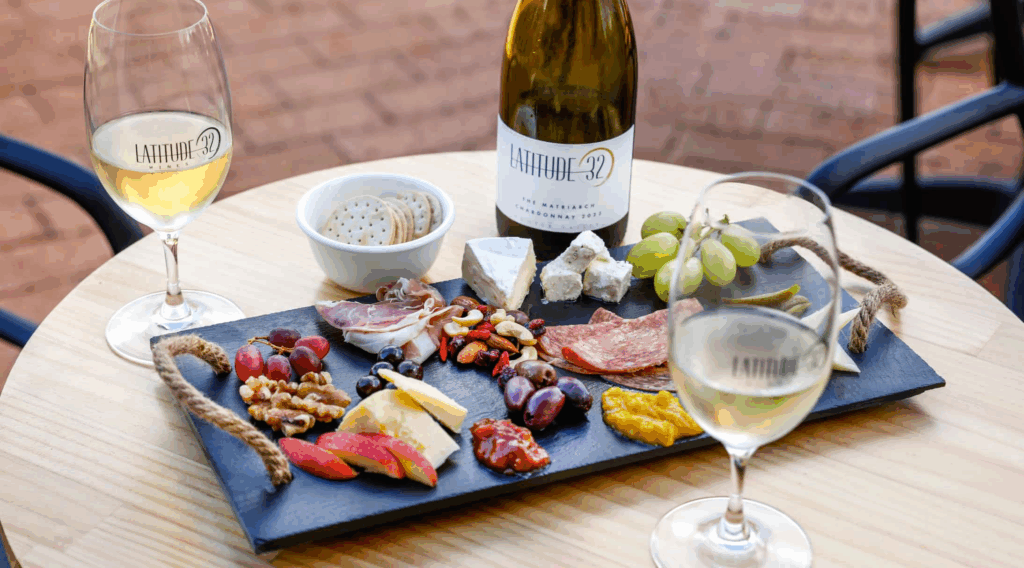
Latitude 32 Wines sits on Hermitage Road in Pokolbin, right in the old heart of the Hunter Valley, a place where vineyards and stories have been growing side-by-side for nearly two centuries. If the Hunter is often described as Australia’s first wine country, Latitude 32 feels like a confident new chapter in that long book, written by people who love the classics but refuse to be trapped by them.
A name that starts with a line on a map
The winery’s name comes from geography, not marketing garnish. The 32nd parallel south cuts through the Hunter Valley, placing it in the famed global band of vineyards that wrap the earth between about 30° and 50° latitude. Latitude 32 leans into that idea, a reminder that Hunter Valley wines are part of a wider world story, even while they stay rooted in their own patch of Wonnarua Country.
That global perspective is not theoretical here. It is the thread that ties together the founders’ past, the way they farm, the wines they make, and the experiences they offer in the vines.
The leap from boardrooms to brokenback views
Latitude 32 Wines was founded by Emma and David White. They did not come from multi-generation vineyard dynasties. Their first careers were in finance and corporate strategy, the kind of work that teaches rigour, planning, and the usefulness of a spreadsheet at midnight. But wine had already been tugging at them for years, first as travellers, then as students of wine culture and WSET learning, and eventually as people who wanted to make something of their own.
In 2019 they stepped away from corporate life and bought a 50-acre old-vine property in Pokolbin. The timing was, frankly, brutal. In quick succession came bushfires, COVID, and those classic Hunter growing seasons that can swing from generous to maddening. The early years were a crash course in humility and resilience. Yet the Whites kept going, leaning on good local advice and a clear sense of why they were there. Their first releases were noticed quickly, earning a strong Halliday rating in the winery’s infancy, which is no small thing in a region with so many established heavyweights.
Two vineyards, one evolving estate
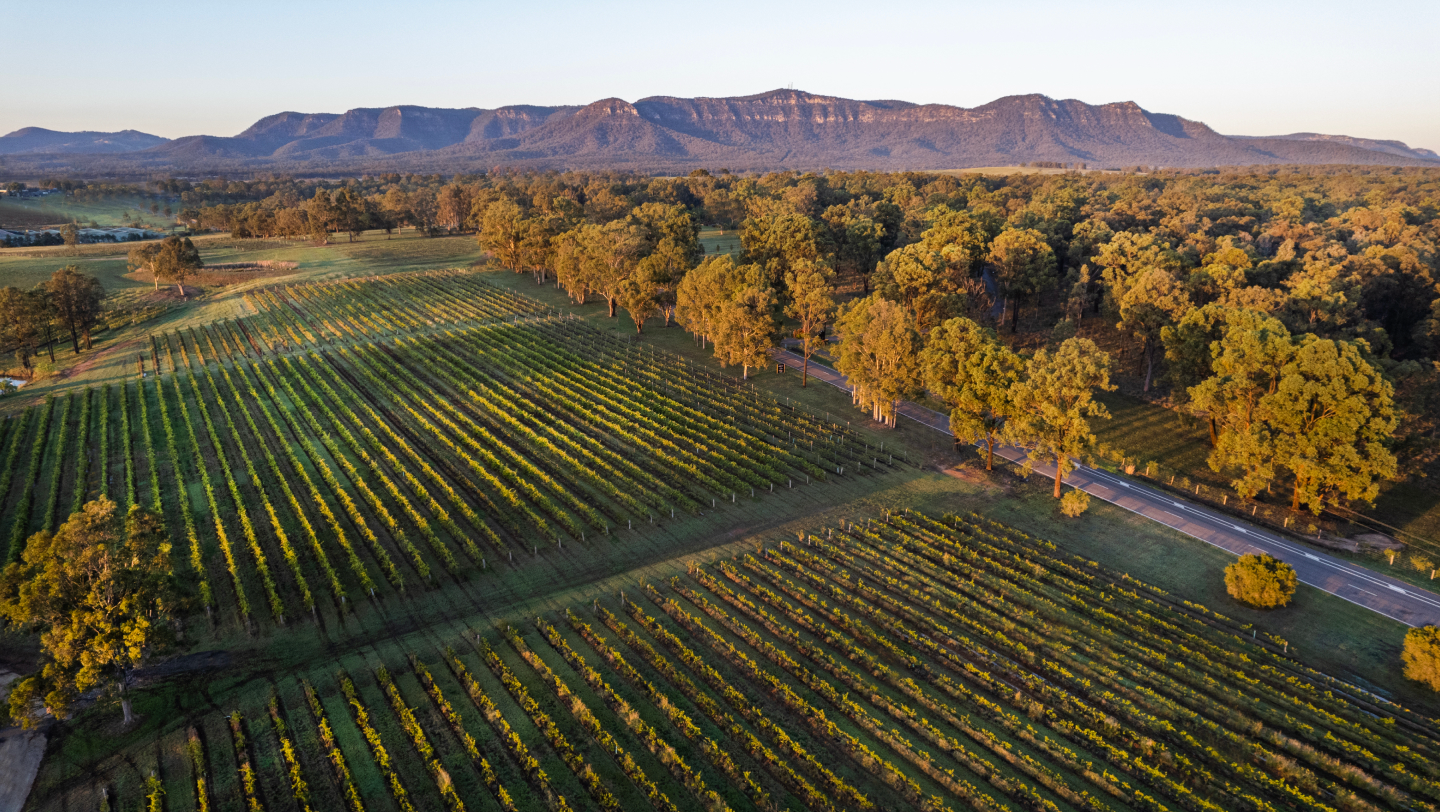
The first vineyard was only the beginning. In 2023 the Whites expanded by purchasing the well-known Mistletoe Vineyard in Pokolbin, adding mature, award-proven blocks of shiraz, semillon, chardonnay and muscat to their holdings, plus the breathing room that would soon allow a proper home base and cellar door.
Today Latitude 32 farms roughly a dozen hectares and produces small-batch volumes by Hunter standards, focused on the varieties the region does best, with a few deliberate curveballs. The point is not to be large. The point is to be expressive.
Farming with the future in mind
Emma White is the driving force in the vineyard. After formal study in viticulture, she has pushed Latitude 32 toward regenerative and sustainable farming, looking after soil health as much as fruit quality. In practice, this means a constant attention to balance: canopy management to manage the Hunter Valley humidity, thoughtful ground cover rather than bare dirt, and a willingness to experiment with what the land is telling them each year.
Their approach is quietly radical for somewhere that can be conservative. They are not rejecting the Hunter playbook. They are re-reading it with fresh eyes, asking what else might belong here. Plans for future plantings have included varieties like Mencia and Aglianico, choices driven by climate sense as much as curiosity.
The winemaking voice
Winemaking at Latitude 32 has been a collaboration from the start. Early vintages were made in the old Lindeman’s winery on McDonald’s Road, with winemaker Damien Stevens helping shape the first releases. More recently, chief winemaker Adam Holmberg has taken the reins, bringing decades of experience and a strong site-driven philosophy. The shared aim has stayed consistent: wines that feel European in structure and restraint, but unmistakably Hunter in flavour, built to age gracefully rather than shout for attention.
Latitude 32 does not make sweet wines. Everything is dry, textural, and aimed at the table, with acidity and savoury detail doing as much work as fruit. That alone places them firmly in the modern Hunter camp.
The wines: classic bones, new angles
Latitude 32’s portfolio reads like a Hunter Valley greatest hits album, then slips in a few tracks you were not expecting.
Semillon, the Hunter’s quiet superstar
In the Hunter, semillon is not just a grape. It is a local dialect. Latitude 32’s semillon leans into the regional style: light in alcohol, bright in youth, and structured to evolve into that signature honey-toast, lanolin, lemon-curd complexity over time. Their 2024 Casuarina Semillon has already picked up a gold medal in the Winewise Small Vigneron Awards, which confirms what visitors have been tasting at the cellar door.
Chardonnay, in more than one key
Emma White calls herself a “chardonnay tragic,” and it shows. Latitude 32 tends to release two chardonnay expressions each vintage, exploring the line between freshness and generosity. The flagship is The Matriarch Chardonnay, part of the premium tasting flight, and typically the wine that makes visitors slow down mid-sentence. It is Hunter chardonnay with intent: citrus and stone fruit held in check by fine acid, oak used as seasoning, not scaffolding.
Shiraz, from apprentice to icon
Hunter shiraz can be polarising for people raised on bigger Barossa styles. Latitude 32 is a persuasive ambassador for the region’s medium-bodied, savoury, spice-laced expression.
- The Apprentice Shiraz is the entry to the house style, medium-weight, juicy, with red fruits, gentle tannins and that Hunter black pepper lift. It is made for drinking now, ideally alongside food, but it still carries a thread of seriousness. latitude32wines.com+1
- The Dux Shiraz sits at the top end. It has been singled out in Halliday coverage and is central to the premium flight. Think darker fruit, more depth, polished tannins, and a long, confident finish. It is Hunter shiraz made to cellar without losing its grace.
The Hunter River Burgundy revival and blends
Latitude 32 has a soft spot for old Hunter blends, especially the once-famous “Hunter River Burgundy” tradition where shiraz and pinot noir meet. The Bro’s Shiraz-Pinot Noir is a modern riff on that idea. It is bright and smooth, the pinot adding lift and perfume to shiraz’s spice. In a valley that respects its past, this is a clever way of letting history breathe instead of calcify.
Rosé with backbone
Their rosé is Hunter to the core, built from red varieties rather than pale, neutral grapes. Halliday has highlighted it as a regional standout, and it makes sense. It has fruit, yes, but also savouriness and a gentle bite that makes it feel like wine, not flavoured water.
White Pinot Noir, the delightful curveball
Then there is The Enigma, a white wine made from 100% pinot noir, inspired by the Whites’ travels to places like Alsace and Oregon. It is possibly the only true white pinot noir of its kind in Australia, pale in colour but carrying some of pinot’s red-wine spice and texture. It is the wine that best captures Latitude 32’s “new lens” philosophy, local fruit interpreted through a worldly memory.
Méthode traditionnelle sparkling
Latitude 32 also makes a traditional method sparkling, aged on lees for extended complexity. In the Hunter, serious sparkling is still a bit of a sleeper category, so this feels both natural and quietly adventurous. Expect fine bead, brioche notes, and a chalky finish that plays beautifully with salty food.
The cellar door: a new Hunter Valley landmark
If you knew Latitude 32 before 2024, you probably knew the wines through bottles or tastings at other venues. That changed with the opening of their own cellar door in April 2024. It is perched over the vines with the Brokenback Range as a daily backdrop, and it has quickly become one of Pokolbin’s most talked-about new tasting rooms.
Inside, the vibe is contemporary without being cold: clean lines, art on the walls, and a team that seems genuinely interested in what you like rather than what they need you to buy. There are multiple tasting spaces including a dedicated members area, plus wide verandahs for those who want sun, breeze, and a view with their glass.
Tasting options are designed for different levels of curiosity:
- a Classic Flight that covers core releases and regional staples,
- a Premium Flight that leans into icons like The Dux and The Matriarch,
- and a more immersive Latitude Lineage style guided experience for deeper dives.
That range matters in the Hunter, because the valley hosts everyone from first-time tourists to hardened cellar rats. Latitude 32 manages to speak to both without condescension.
Food, fun, and the right kind of playfulness
Latitude 32 understands that modern wine lovers want more than a counter, a spittoon, and a wall of price tags. They have built experiences that respect wine but do not take themselves too seriously.
Dumplings and wine
The headline pairing is Dumplings & Wine, five dumplings matched with five wines. It sounds casual, and it is, but it is also cleverly educational. Spice, fat, acid, texture. You feel the logic in your mouth rather than hearing it in a lecture. It has become a signature drawcard for visitors looking for something different in Pokolbin.
Picnic and breakfast in the vines
For slower days, there are Picnic in the Vines sessions and the seasonal Breakfast in the Vines, experiences that put you outside with a hamper, a bottle, and the steady theatre of vineyard life around you. It is a gentle reminder that wine is an agricultural pleasure first, a product second.
The broader feel
All of this fits the Latitude 32 personality. Their motto is essentially “tradition, but with air in it.” The Hunter is full of grand old houses and historic labels. Latitude 32 is not trying to out-heritage anyone. They are trying to be a place you want to return to, with wines that grow alongside you.
Where Latitude 32 fits in the Hunter Valley story
It is tempting to call Latitude 32 “new,” but that word can cheapen what they are doing. In the Hunter Valley, where some vineyards have roots older than the Federation, any winery founded in 2019 will be new on paper. Yet Latitude 32 is already behaving like a settled part of the region. They have taken on old vines, made serious wines from them, built a cellar door that enhances Hermitage Road, and created experiences that pull a younger, more adventurous crowd into the orbit of Hunter Valley wine.
They also work as a bridge. For drinkers just discovering the Hunter Valley, Latitude 32’s wines are an accessible way in: clean, vivid, clearly varietal, and welcoming. For seasoned Hunter lovers, their portfolio offers both reassurance, in well-made semillon and shiraz, and intrigue, in white pinot noir and revived blends.
Most importantly, there is a clarity to their purpose. Emma and David White started Latitude 32 from the point of view of consumers who fell in love with wine around the world, then came home to make bottles that felt honest, joyful, and a little surprising. That origin story shows up everywhere: in the vineyard rows, in the line-up on the tasting bench, and in the small moments of hospitality when someone in the cellar door says, “Try this, I think you’ll get a kick out of it,” and they are right.
The road ahead
As of late 2025, Latitude 32 Wines is in the sweet early phase of a winery’s life, where momentum meets imagination. Their vineyard base is stable, the cellar door is thriving, and the wines are earning both accolades and repeat customers. Their future plantings point to a longer-term view of the Hunter’s changing climate, and their winemaking team is clearly tuned to the region’s strengths rather than chasing fashionable noise.
If you are looking for a neat summary of Latitude 32, it might be this: they are proving that being young in an old region is not a disadvantage. It is a chance to listen carefully, respect what works, and then add your own voice.
On a sunny Pokolbin afternoon, with the Brokenback Range in front of you and a glass of The Apprentice or The Matriarch catching the light, that idea feels less like a philosophy and more like a simple truth. Latitude 32 Wines is not the future of Hunter Valley wine. It is part of its present, and it is doing a fine job of making that present taste very, very good.